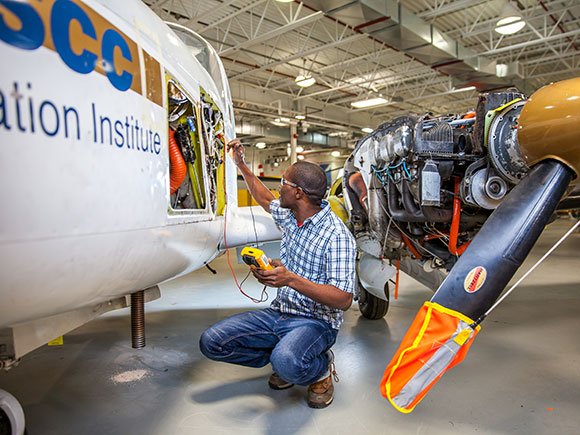
Aviation offers technical, operational, and support roles beyond pilots and cabin crews. For a maintenance-focused search, compare the equipment, training, and responsibilities attached to each position.
Explore adjacent technical roles
Look at aircraft maintenance, avionics, structures, components, technical records, planning, and support work. Do not assume that similar titles carry identical requirements. Ask what the employee works on and how the position interacts with the maintenance organization.
Map your experience to the requirements
Identify the qualifications and practical skills requested in advertisements. Describe relevant experience precisely, including transferable skills from another technical field. If a role is outside your current knowledge, determine the training and supervision available.
Choose a focused first application list
Select several employers or providers with roles aligned to your background. Record locations and schedules as well as duties. Use responses to refine your target and decide what additional learning would be valuable.
Translate technical experience into a role map
List the kinds of work you have performed, the equipment involved, and the level of responsibility you held. Compare that evidence with several aviation technical and support advertisements. Some experience may transfer to inventory, equipment, records, or technical work while other roles require a different qualification route. Keep the match specific rather than assuming that all mechanical or electrical work is interchangeable. Ask employers how they assess a candidate from another technical field. This creates a more useful starting point than selecting a title because it sounds similar to your previous job.
Choose adjacent roles deliberately
A nearby support or planning role may be a suitable goal in its own right, but it should not be treated as an automatic bridge to another position. Ask what development is available and which requirements apply to any later transition. Consider the duties you would actually do, the schedule, and whether the work interests you. If your main goal remains aircraft maintenance, keep the qualification plan separate and review how the role supports it. A deliberate choice can provide useful experience without relying on an unstated promise that every aviation job leads to the same career path.
Read a vacancy as a set of requirements
Copy the main duties into a simple comparison sheet and separate required qualifications from preferred experience. Identify the aircraft or equipment, reporting location, shift, travel expectations, and employment arrangement. Then list evidence from your background beside each important requirement. If a term is unfamiliar, research it or ask the employer rather than assuming it describes work you already know. Review how the employer will train and supervise someone entering the team. An application is strongest when it connects real experience to the advertised work; repeating every keyword without supporting evidence can make an otherwise suitable candidate less credible.
Separate qualifications from job-specific readiness
A qualification is important evidence, but an employer also needs to understand your experience with the particular systems, equipment, and responsibilities in the vacancy. Present the certificate or award accurately and explain the work you have actually performed. Ask which training and authorizations are needed after joining the organization. Avoid treating observation, school practice, and employment experience as interchangeable. If a requirement is outside your background, say so and discuss an appropriate learning route. This distinction helps a candidate describe strengths honestly and helps the employer plan onboarding, rather than assuming a familiar qualification settles every question about readiness.
Your next steps
- Compare adjacent technical and support roles.
- Match evidence of experience to the requirements.
- Build a focused application list.